


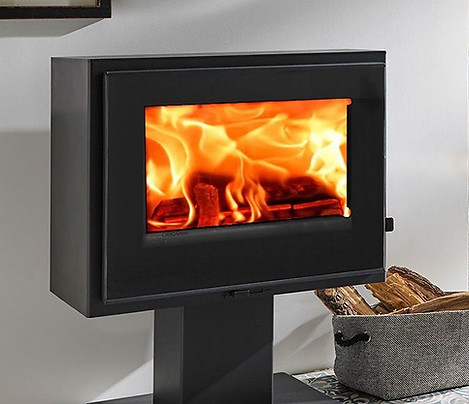
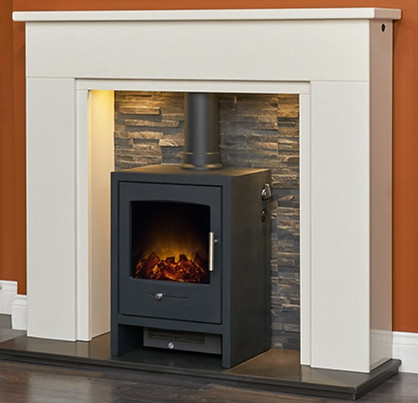
Multi-Fuel Or Wood Burning
Wood-Burning Stoves: The Pure Experience
A dedicated wood-burning stove is designed to burn wood and only wood. These appliances are built to facilitate the specific way logs combust.
The Pros:
-
Optimal Wood Combustion: Wood burns best on a bed of ash with air circulating from above. Because these stoves have no grate, they allow this ash bed to build up on the bottom of the stove, providing the perfect environment for logs.
-
Aesthetic Appeal: Wood burns beautifully and provides a classic, pleasing flame that many homeowners desire.
-
Cost-Effective: Generally, wood-burning stoves are slightly cheaper than their multi-fuel equivalents because they do not require a grate or ashpan. If you have access to your own woodland and space to store logs, this is a very cheap heating option.
The Cons:
-
Practicality Issues: Wood burns quickly and requires frequent attention.
-
Storage Requirements: To keep costs down, you need significant space and time to prepare and store logs. If you are forced to buy small bags of kiln-dried logs due to limited space, it can quickly become an expensive way to heat your home.
Multi-Fuel Stoves: The Versatile All-Rounder
A multi-fuel stove offers the flexibility to burn both wood and solid fuels.
The Pros:
-
Fuel Flexibility: You aren't locked into one fuel source. You can choose based on availability or price.
-
Ease of Cleaning: These stoves feature a grate and an ashpan underneath. The grate allows ashes to drip through, which makes cleaning easier and increases airflow.
-
Better Heat Retention: By using solid fuel, the stove holds its heat much longer than wood alone. This is the practical choice for those who use their stove frequently or wish to achieve an "overnight burn."
-
Airflow Control: The grate allows air to circulate from underneath, which is essential for the proper combustion of solid fuels.
The Cons:
-
Higher Initial Cost: Due to the added components (the grate and ashpan), these stoves are usually slightly more expensive than wood-only models.
-
Lighting and Response: Solid fuel can be harder to light and is less responsive to changes in temperature when you adjust the air controls.
-
Non-Optimal Wood Burning: While wood burns "satisfactorily" on a grate, it is technically not the most optimal way to burn logs compared to a flat ash bed.
The Verdict: Which should you choose?
Your choice depends largely on your lifestyle:
-
Choose a Wood-Burner if: You have a free or cheap supply of wood, plenty of storage space, and you value the traditional look of a wood fire above all else.
-
Choose a Multi-Fuel Stove if: You want a practical, frequent heating source. Solid fuel is more reliable for long-term heat, even if the flames are less "pleasing to the eye."
Our Recommendation: In our experience, most people are better suited to a multi-fuel stove. By burning both wood and solid fuel simultaneously, you get the "best of both worlds"—the beautiful flame of wood combined with the long-lasting heat of solid fuel.
Explore our PANADERO range for a selection of contemporary multi-fuel stoves designed to give you total control over your home heating.


Fireplace & Stove UK
1 Scott Court, Scott RD
Droylsden
Manchester
M43 7UW
0161 536 2465
07707664636